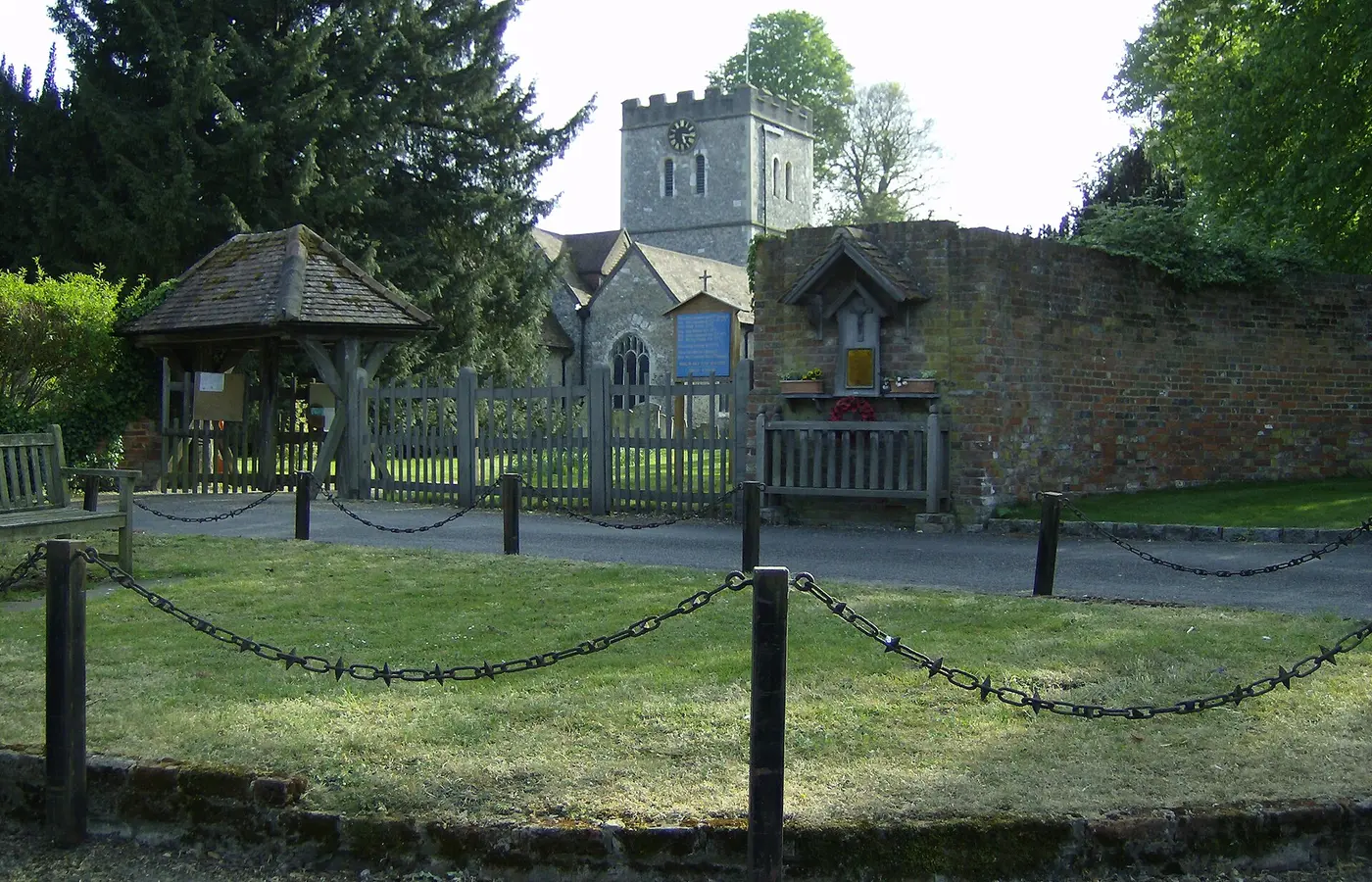
Little Marlow as Morton Fendle
Faithful unto Death uses St John the Baptist Church and the compact village green for the parish centre of Morton Fendle. Those two features give a clear starting point for recognising Little Marlow. Begin with the church and its relationship to the open space, then compare the views used in the episode. The fictional village name belongs to the investigation; the real church dedication and village name are the useful details for a visit.
Little Marlow’s small scale helps the screen suggest a community whose neighbours know one another. That is an observation about the effect of the setting, not a reason to treat the village as a permanent film set. Keep to public roads and paths, and allow the church and surrounding homes their ordinary uses. A short walk can be satisfying without trying to reproduce every scene from the case.
The same church in Tainted Fruit
In Tainted Fruit, St John the Baptist represents the parish church in Midsomer Malham. Comparing that appearance with Faithful unto Death shows how the same real building can belong to two different fictional communities. Keep the episodes separate in your notes so that one screen name does not become attached to the church as if it were its real dedication.
A useful rewatch can focus on how the building is introduced and what neighbouring views appear with it. The church’s physical features remain, while the surrounding narrative changes. Read the episode introduction for the premise and open the sealed solution only after watching. A location comparison needs the visible setting and the correct episode title, not an advance explanation of the crime.
A house and a village-green ceremony
Sauce for the Goose uses a High Street house as the home of Dexter Lockwood’s father. The Noble Art uses the village green for the unveiling of the Tom Sayers statue. These are distinct filming matches: one is a private domestic setting, the other an event staged in an open village space. Neither turns the fictional ceremony or household into a continuing attraction.
The green is particularly useful for comparing the real layout with a scene arranged for an episode. Imagine the temporary people and objects of the ceremony removed, and look instead at the relationship between the open space and surrounding buildings. For the house connection, respect private property and avoid searching for an unconfirmed numbered address. The linked episode page supplies the story context without requiring a close-up visit to a home.
A parish with a longer history
Buckinghamshire’s heritage account traces St John the Baptist back to a twelfth-century chapel, later rebuilt as a church. It also distinguishes the histories of Little Marlow village, Westhorpe and the former religious site at Well End. The present parish is therefore more varied than a single village-centre view suggests. A filming visit can be an introduction to that history rather than the only reason for noticing the place.
Historic England lists the church at Grade II* and describes successive medieval changes to its chancel, nave, aisles and tower. Those layers offer details to look for when comparing a photograph with the real exterior. Use the heritage descriptions for the actual building and the episode links for its screen identities; together they give a more precise account than calling every old church nearby a Midsomer location.
Confirmed · Buckinghamshire council heritage information ↗
Combining a village stop with a stay
The river is part of the wider setting, but a journey between Little Marlow, Marlow or Bourne End needs a checked public route. Decide how far you want to walk and where you will finish before choosing accommodation. Compare the exact location of a stay with that plan. Keep the four filming connections above as a compact rewatch list, and leave enough time to see the real village without turning the afternoon into a race between pins.
Confirmed · Historic England church listing ↗