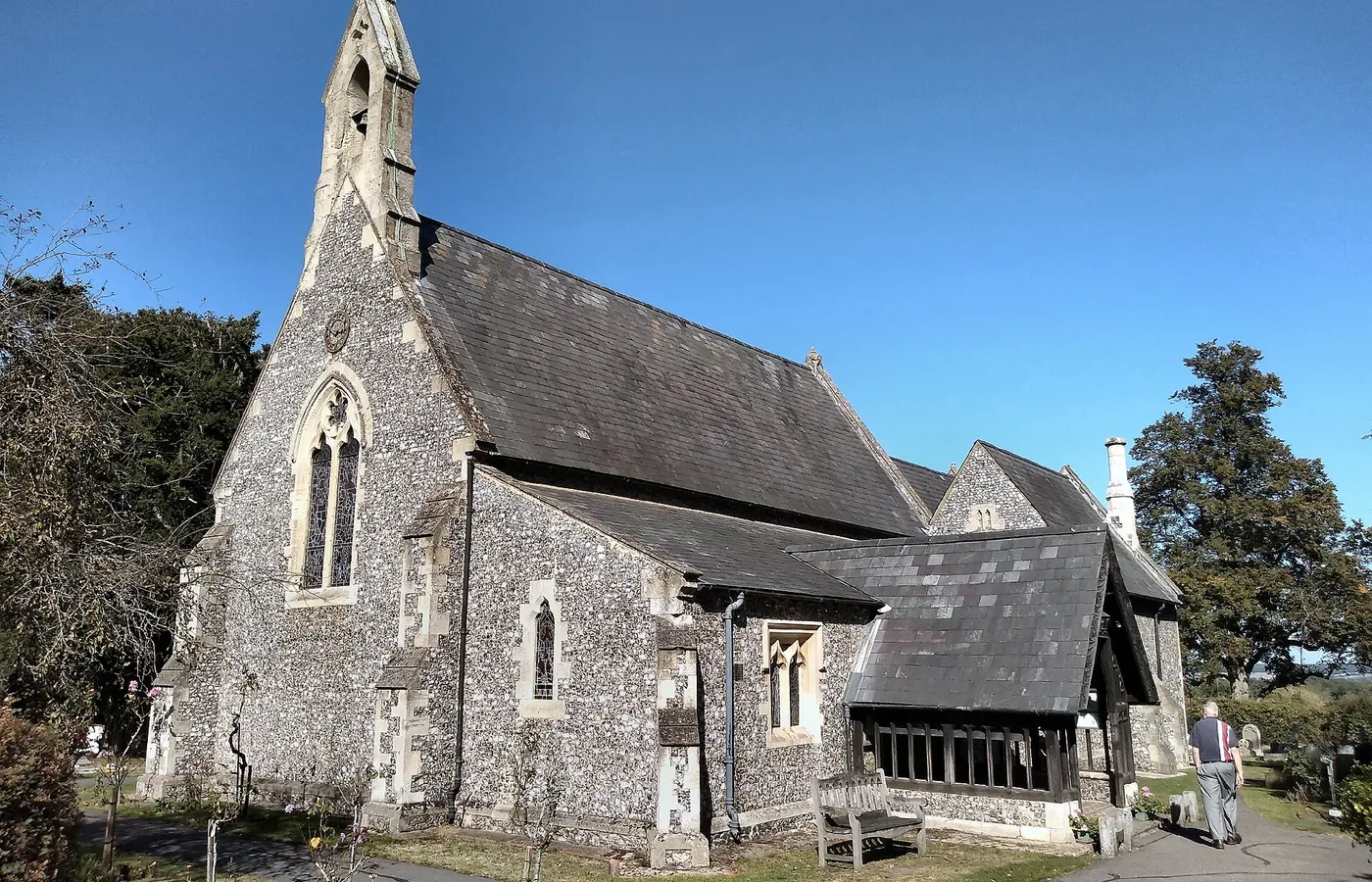
The church in Habeas Corpus
St John the Baptist in Cookham Dean is the named church filming connection for Habeas Corpus. Keep that real dedication with the episode title when searching for the building. Cookham Dean and Cookham are related places, but their church names are different: St John the Baptist is the Cookham Dean church, while Holy Trinity is in Cookham. The distinction matters when a map search presents both.
Habeas Corpus belongs to the John Barnaby period. The wider Cookham-area connection to Second Sight is also linked on this page, but a broad area reference and an identified building are different levels of detail. Follow each episode link to see the particular filming information attached to it. That gives you a clearer comparison than assuming every Cookham scene was made beside the same church.
The real church and its foundation
The parish’s history explains that Cookham Dean began the 1840s without its own church or school. Local clergy organised the project, and a temporary cottage was licensed for worship while plans developed. Land on Sterlings Green was provided for the new church, with the commoners’ consent. The foundation stone was laid on 15 July 1844.
Richard Cromwell Carpenter prepared the design, and Silver & Sons of the Maidenhead area carried out the building work. The parish describes a comparatively simple church drawing on fourteenth-century architectural forms. Its history gives the building a local purpose quite separate from the later television appearance: it was created for a growing community’s worship and education rather than for a picturesque screen scene.
Confirmed · St John the Baptist parish history ↗
Reading the architecture
Historic England identifies St John the Baptist on Church Road, Cookham Dean, as a Grade II-listed building. Its description records flint walls with Bath stone dressings and a slate roof, together with a nave, chancel, south aisle, porch and bellcote. These details help explain the building’s texture and outline when seen from outside.
Look at the relationship between the timber porch, the stone window dressings and the flint walling when comparing a photograph with a scene. The heritage description is useful for recognising the actual building, while the episode information explains its use on screen. Keep those two kinds of identification together: one tells you what the place is, the other why it may look familiar to a Midsomer viewer.
Confirmed · Historic England listing ↗
Details described by the parish
The parish’s interior guide describes a pulpit presented in 1870 by clergy of the Maidenhead Deanery. It also identifies an octagonal font near the principal door, decorated with Christian symbols. The position of the font reflects its association with entry into the church. These are details of the real parish building, not claims about what appears in a particular television shot.
If the building is open during a permitted visit, the parish guide offers things to notice beyond the screen connection. Read the descriptions beforehand and allow worshippers and church activities to take priority. An exterior comparison can still be worthwhile if an interior visit is unsuitable. Use the parish’s own contact and service information when planning, rather than assuming opening arrangements from a film scene.
Confirmed · official church interior guide ↗
Choosing a Cookham-area visit
The existing map places Cookham Dean above the riverside settlement, amid lanes and wooded slopes. Decide whether your interest is the church, a wider walk or the connection to Cookham’s artistic history before choosing where to begin. A route combining several interests needs time for the differences in terrain and the ordinary traffic on local roads.
For accommodation, compare the exact address of each result with the part of Cookham you intend to explore. Keep St John the Baptist’s real name in your notes, along with Habeas Corpus and the broader Second Sight reference. That small list gives your visit a clear focus while leaving room to enjoy the real village without searching for an imaginary Midsomer sign on every corner.